
RFAvailable
RF Wavelength Calculator
Calculate RF wavelength, frequency, propagation velocity, velocity factor, quarter-wave length, and half-wave length.
Calculator category
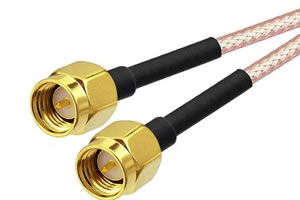
RF engineering calculators for impedance, wavelength, transmission, RF power, antennas, matching, and wireless system design.
Available Calculators
12
Engineering Applications
4
Each listed tool links to a working calculator with engineering inputs, formulas, examples, notes, and related resources.
Calculate RF wavelength, frequency, propagation velocity, velocity factor, quarter-wave length, and half-wave length.
Convert RF power between dBm, dBW, watts, milliwatts, gain, and attenuation.
Convert VSWR, return loss, reflection coefficient, reflected power, and mismatch loss.
Calculate free-space path loss from frequency and distance for first-pass wireless propagation estimates.
Estimate EIRP, received power, system loss, and link margin for RF communication paths.
Estimate quarter-wave, half-wave, full-wave, and custom antenna lengths from frequency and velocity factor.
Calculate quarter-wave impedance transformer characteristic impedance and physical length for narrowband RF matching.
Calculate low-pass and high-pass RF L-match Q, reactance, inductance, and capacitance values.
Calculate RF transmission line electrical length, phase shift, propagation delay, wavelength, and velocity factor.
Calculate RF coaxial cable attenuation, remaining output power, power ratio, and maximum cable length.
Convert RF noise figure, noise factor, equivalent noise temperature, thermal noise, noise floor, and cascaded receiver noise figure.
Calculate ideal received power from transmit power, antenna gains, frequency, and distance.
Choose the calculator that matches the decision you need to make: decode a component marking, size a value, check a frequency response, estimate loss, or verify a safety margin. A category page is useful only when it helps you reach a working tool, so this page lists released calculators only.
Calculator results depend on unit choices, idealized formulas, tolerance, temperature, frequency range, and component limitations. Review the formula and engineering notes on each calculator page before using the result in a schematic, BOM, or PCB layout.
Use the calculated value as a design reference, then confirm it against datasheets, derating curves, layout parasitics, measurement conditions, and manufacturer limits. The related guides below provide background when a calculation needs more context.
Engineering Guide
Design receiver blocker margin with consistent reference planes, compression, two-tone intermodulation, preselection tradeoffs, and desensitization tests.
18 min · Advanced
Engineering Guide
Calculate RF wavelength, antenna starting length, and coaxial feed-line loss with correct velocity-factor, shortening-factor, attenuation, and power-ratio boundaries.
18 min · Intermediate
Engineering Guide
Learn the RF link-budget workflow, including dB and dBm, EIRP, free-space path loss, Friis received power, antenna gain, cable loss, receiver sensitivity, and link margin.
18 min · Intermediate
Engineering Guide
Learn how reflection coefficient, VSWR, return loss, quarter-wave transformers, L-networks, velocity factor, and electrical length fit into a practical RF matching workflow.
19 min · Intermediate
Engineering Guide
Design RF receiver noise chains using noise figure, equivalent noise temperature, kTB, equivalent noise bandwidth, Friis cascades, and sensitivity margins.
18 min · Intermediate
PCB calculators for trace design, copper thickness, current capacity, thermal design, and board-level constraints.
Open →Use electronics conversion tools for frequency and period, AWG wire gauge, dBm and watts, hexadecimal, decimal, binary, and engineering workflows.
Open →Communication calculators for UART, CAN, SPI, I2C, RS-485, and embedded electronic interfaces.
Open →Electronic filter calculators for cutoff frequency, bandwidth, resonance, passive filters, and active filter design.
Open →