
TransformersAvailable
Transformer Turns Ratio Calculator
Calculate ideal primary-to-secondary turns ratio, voltage ratio, current ratio, and winding turns.
Calculator category
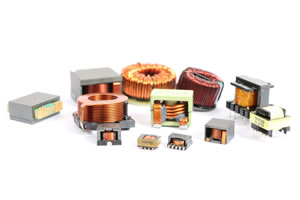
Design and analyze transformers including turns ratio, voltage, current, impedance, power, winding, and magnetic parameters.
Available Calculators
12
Engineering Applications
5
Each listed tool links to a working calculator with engineering inputs, formulas, examples, notes, and related resources.
Calculate ideal primary-to-secondary turns ratio, voltage ratio, current ratio, and winding turns.
Calculate ideal transformer primary-referred impedance, secondary-referred impedance, and required turns ratio.
Calculate single-phase transformer rated current, load VA, load percentage, remaining capacity, and design VA target.
Calculate sine-wave transformer volts per turn, turns per volt, theoretical winding turns, and RMS voltage from core conditions.
Calculate peak core flux density Bmax from RMS winding voltage, frequency, turns, and effective core area.
Calculate transformer secondary voltage regulation from no-load and full-load terminal voltage.
Calculate transformer real-power efficiency, total power loss, and known core/copper/other loss breakdown.
Estimate transformer winding wire length, DC resistance, voltage drop, and winding I²R copper loss from turns and MLT.
Calculate transformer winding window utilization, occupied area, remaining area, and theoretical maximum turns.
Calculate ideal magnetizing reactance, RMS magnetizing current, Lm, and excitation frequency from sinusoidal transformer excitation values.
Reflect actual load impedance between transformer windings using a = Np/Ns and the ideal square-law relationship for R + jX loads.
Analyze center-tapped, series-aiding, series-opposing, and compatible parallel transformer secondary winding connections.
Choose the calculator that matches the decision you need to make: decode a component marking, size a value, check a frequency response, estimate loss, or verify a safety margin. A category page is useful only when it helps you reach a working tool, so this page lists released calculators only.
Calculator results depend on unit choices, idealized formulas, tolerance, temperature, frequency range, and component limitations. Review the formula and engineering notes on each calculator page before using the result in a schematic, BOM, or PCB layout.
Use the calculated value as a design reference, then confirm it against datasheets, derating curves, layout parasitics, measurement conditions, and manufacturer limits. The related guides below provide background when a calculation needs more context.
Engineering Guide
Estimate transformer core loss from material data, frequency, flux density, and waveform, then combine magnetic and copper loss in a measured thermal workflow.
19 min · Advanced
Engineering Guide
Use open-circuit and controlled short-circuit measurements to estimate the excitation and series branches, then check regulation and real loss.
10 min · Advanced
Engineering Guide
Design transformer windings using RMS current, conductor area, window fill, insulation, hot resistance, copper loss, temperature, and manufacturability checks.
20 min · Intermediate
Engineering Guide
Size transformer VA and load current, calculate regulation, estimate hot winding resistance and copper loss, and separate apparent power from real-power efficiency.
20 min · Intermediate
Engineering Guide
Design transformer impedance matching using turns ratio, reflected complex load, source and load reference planes, VA limits, bandwidth, parasitics, losses, and measurement.
17 min · Intermediate
Engineering Guide
Learn transformer turns ratio, voltage and current relationships, impedance reflection, VA rating, voltage regulation, and center-tapped, series, and parallel winding connections.
18 min · Intermediate
Power electronics calculators for regulators, converters, thermal design, current estimates, and hardware margins.
Open →Inductor calculators for converter design, LC resonance, EMI filtering, RF circuits, and stored energy.
Open →MOSFET calculators for switching loss, conduction loss, gate drive, thermal checks, and power hardware design.
Open →