
Wire & CableAvailable
Wire Resistance Calculator
Calculate DC conductor resistance from material resistivity, length, cross-sectional area, or AWG size.
Calculator category
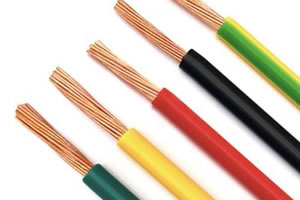
Calculate wire resistance, voltage drop, current density, cable losses, conductor size, and electrical wiring parameters.
Available Calculators
12
Engineering Applications
19
Each listed tool links to a working calculator with engineering inputs, formulas, examples, notes, and related resources.
Calculate DC conductor resistance from material resistivity, length, cross-sectional area, or AWG size.
Calculate DC cable voltage drop, voltage-drop percentage, load voltage, loop resistance, and I²R cable loss.
Calculate minimum conductor area and recommended AWG from current, one-way cable length, material, and a voltage-drop limit.
Calculate voltage-drop-limited maximum one-way cable length from wire size, current, material, and allowed drop.
Calculate DC cable I²R conductor loss, voltage drop, optional energy loss, and wire delivery efficiency.
Calculate conductor current density, required area, and current from current-density criteria using J = I/A.
Calculate equivalent area, current sharing, resistance, voltage drop, and I²R loss for identical parallel conductors.
Convert conductor diameter, cross-sectional area, circular mils, kcmil, and AWG geometry for wire reference work.
Convert electrical resistivity and conductivity, calculate wire resistance from material property, and infer resistivity from measured conductor data.
Estimate bare conductor mass, volume, mass per meter, kg per kilometer, and standard-gravity weight force from material density, area, length, and quantity.
Calculate conductor resistance change versus wire temperature using copper, aluminum, or custom temperature coefficient of resistance.
Compare AWG, metric area, circular mils, resistance per length, conductor mass, voltage drop, power loss, and current density for candidate wire sizes.
Choose the calculator that matches the decision you need to make: decode a component marking, size a value, check a frequency response, estimate loss, or verify a safety margin. A category page is useful only when it helps you reach a working tool, so this page lists released calculators only.
Calculator results depend on unit choices, idealized formulas, tolerance, temperature, frequency range, and component limitations. Review the formula and engineering notes on each calculator page before using the result in a schematic, BOM, or PCB layout.
Use the calculated value as a design reference, then confirm it against datasheets, derating curves, layout parasitics, measurement conditions, and manufacturer limits. The related guides below provide background when a calculation needs more context.
Engineering Guide
Allocate minimum remote-load voltage across source tolerance, contacts, switches, reserve, and hot supply-and-return cable before solving allowable DC length.
10 min · Intermediate
Engineering Guide
Measure milliohm conductor and installed-path resistance with Kelvin sense points, current reversal, thermal control, and load-drop checks.
10 min · Intermediate
Engineering Guide
Design parallel conductor paths using conductance-based sharing, termination resistance, temperature feedback, fault redistribution, protection, symmetric routing, and branch measurement.
18 min · Advanced
Engineering Guide
Calculate conductor area, equivalent diameter, circular mils, material volume, mass per length, and bare-wire mass with clear stranded and finished-cable boundaries.
18 min · Intermediate
Engineering Guide
Learn wire resistance, one-way versus loop length, voltage drop, I squared R power loss, current density, parallel conductors, temperature correction, and practical conductor sizing boundaries.
18 min · Intermediate
Power electronics calculators for regulators, converters, thermal design, current estimates, and hardware margins.
Open →Use electronics conversion tools for frequency and period, AWG wire gauge, dBm and watts, hexadecimal, decimal, binary, and engineering workflows.
Open →PCB calculators for trace design, copper thickness, current capacity, thermal design, and board-level constraints.
Open →