
ThermalAvailable
Thermal Resistance & Temperature Rise Calculator
Calculate steady-state temperature rise, equivalent thermal resistance, final temperature, thermal-limit power, allowable Rθ, and thermal margin.
Calculator category
Calculate thermal resistance, junction temperature, heat dissipation, heat sink requirements, and electronic cooling parameters.
Available Calculators
12
Engineering Applications
4
Each listed tool links to a working calculator with engineering inputs, formulas, examples, notes, and related resources.
Calculate steady-state temperature rise, equivalent thermal resistance, final temperature, thermal-limit power, allowable Rθ, and thermal margin.
Calculate required heatsink RθSA, junction temperature, sink temperature, thermal path drops, suitability margin, and maximum steady-state thermal power.
Calculate equivalent thermal resistance, series temperature drops, parallel heat-flow distribution, and simple series-parallel thermal networks.
Calculate allowable rating, remaining rating, derating slope, zero-rating endpoint, maximum operating temperature, and applied-load margin from datasheet thermal derating data.
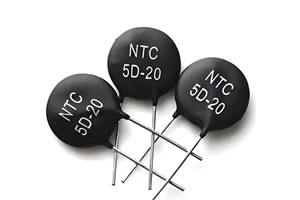
Calculate NTC thermistor resistance, temperature, Beta value, Steinhart-Hart conversion, and first-order self-heating estimates.
Calculate PT100 and PT1000 RTD resistance, temperature, sensitivity, and measurement-current self-heating using IEC 60751 Callendar-Van Dusen equations.
Calculate TIM bulk thermal resistance, temperature drop, heat transfer, required conductivity, bond-line thickness, contact area, and TIM comparison results.
Calculate steady-state solid conduction, Fourier's law heat transfer, heat flux, required conductivity, required thickness, and composite wall heat flow.
Calculate thermal time constant, first-order heating response, cooling response, time to target temperature, thermal capacitance, and required thermal R/C values.
Calculate convection heat transfer rate, heat flux, convective thermal resistance, required h, required area, and surface or fluid temperature.
Estimate enclosure temperature rise, internal air temperature, required Rθ, effective UA, heat-rejecting area, allowable heat load, and ideal ventilation airflow.
Calculate first-order temperature drift, ppm per degree, percent per degree, absolute coefficient change, target temperature, and worst-case range.
Choose the calculator that matches the decision you need to make: decode a component marking, size a value, check a frequency response, estimate loss, or verify a safety margin. A category page is useful only when it helps you reach a working tool, so this page lists released calculators only.
Calculator results depend on unit choices, idealized formulas, tolerance, temperature, frequency range, and component limitations. Review the formula and engineering notes on each calculator page before using the result in a schematic, BOM, or PCB layout.
Use the calculated value as a design reference, then confirm it against datasheets, derating curves, layout parasitics, measurement conditions, and manufacturer limits. The related guides below provide background when a calculation needs more context.
Engineering Guide
Design electronics for pulsed heating with thermal RC models, repeated-duty peak temperature, transient thermal impedance, model limits, and measured validation.
17 min · Advanced
Engineering Guide
Calculate temperature-driven parameter drift using signed ppm/°C, percent per degree, linear coefficients, model boundaries, and practical error budgets.
16 min · Intermediate
Engineering Guide
Build and verify electronics thermal paths using power loss, thermal resistance networks, junction limits, heat sinks, TIMs, conduction, convection, transient response, and enclosure constraints.
22 min · Intermediate
Engineering Guide
Design NTC thermistor and PT100/PT1000 measurement circuits with correct models, excitation, self-heating, wiring compensation, ADC interfaces, calibration, and error budgets.
20 min · Intermediate
Power electronics calculators for regulators, converters, thermal design, current estimates, and hardware margins.
Open →MOSFET calculators for switching loss, conduction loss, gate drive, thermal checks, and power hardware design.
Open →PCB calculators for trace design, copper thickness, current capacity, thermal design, and board-level constraints.
Open →